Butt in Griff
Artist: Günter Grass (1927-2015) · 1982
View 3D model
Photos
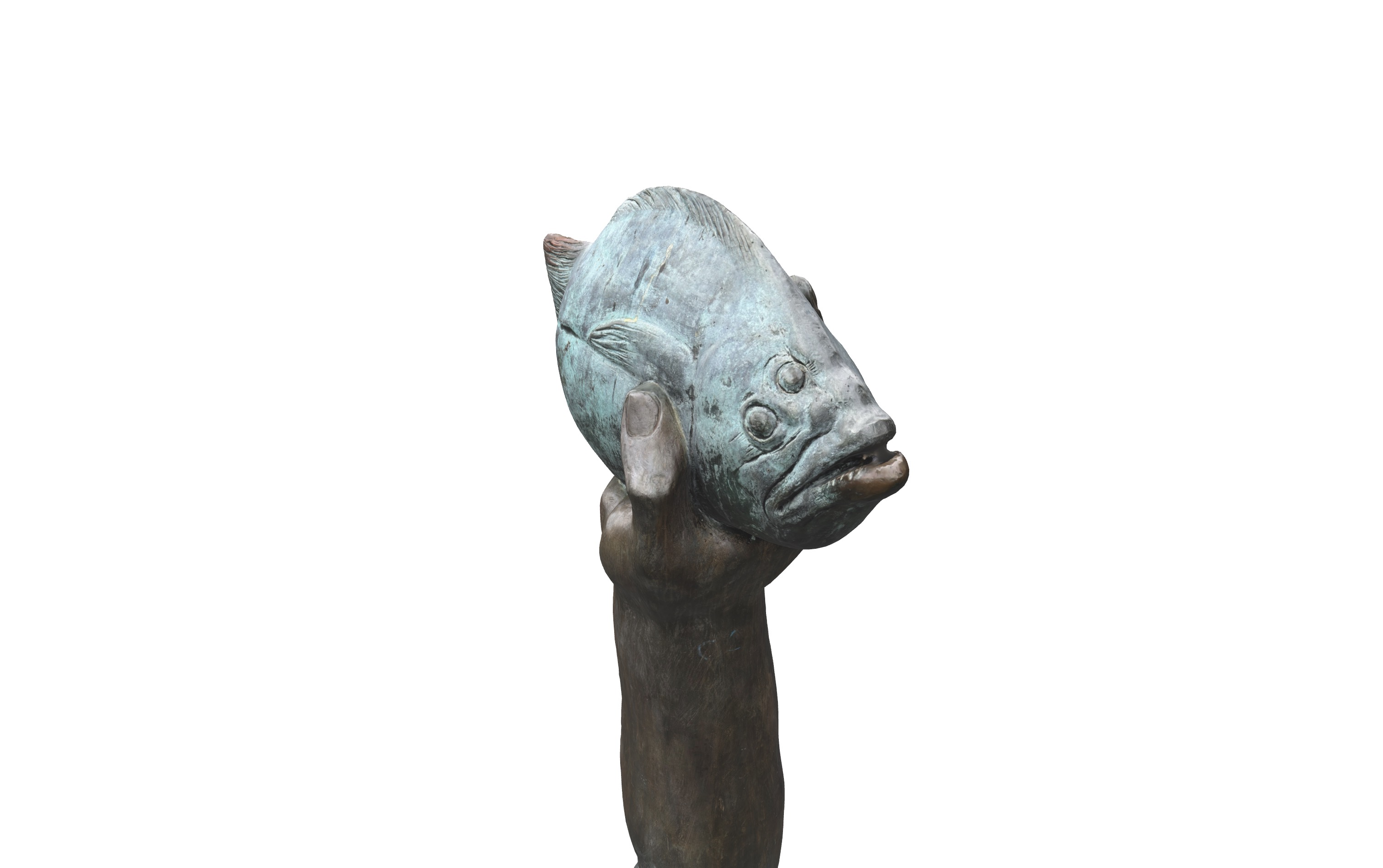
The bronze sculpture 'Butt im Griff' (Flounder in Hand) is a prominent work by the Nobel Prize-winning author and artist Günter Grass. Standing approximately 2.30 meters tall, the sculpture depicts a powerful arm with a hand firmly grasping a halibut. This motif is derived from the imagery of his famous 1977 novel 'The Flounder' and symbolizes, in Grass's own interpretation, life experience, wisdom, and the human attempt to control nature or destiny.
The sculpture was installed in 2004 in front of the Paulinerkirche in Göttingen, based on a clay model the artist created in 1982. Grass, who was active as a sculptor and graphic artist alongside his writing career, used this work to provide a physical manifestation of his literary themes. Another cast of this piece is located in the sculpture courtyard of the Günter Grass House in Lübeck, highlighting the deep connection between his plastic and textual output.
Visitors to the sculpture appreciate the detailed surface texture of the bronze, which makes the tension between the human hand and the slippery body of the fish tangibly perceptible. Today, 'Butt im Griff' serves as a cultural landmark in Göttingen, commemorating the versatile artistic legacy of one of Germany's most significant 20th-century intellectuals. A smaller version of the sculpture also gained fame as the design for the German Book Prize awarded at the Leipzig Book Fair.