6-piece Sculpture Ensemble, The Chair
View 3D model
Photos
Art at the Deutsches Theater: A Guide
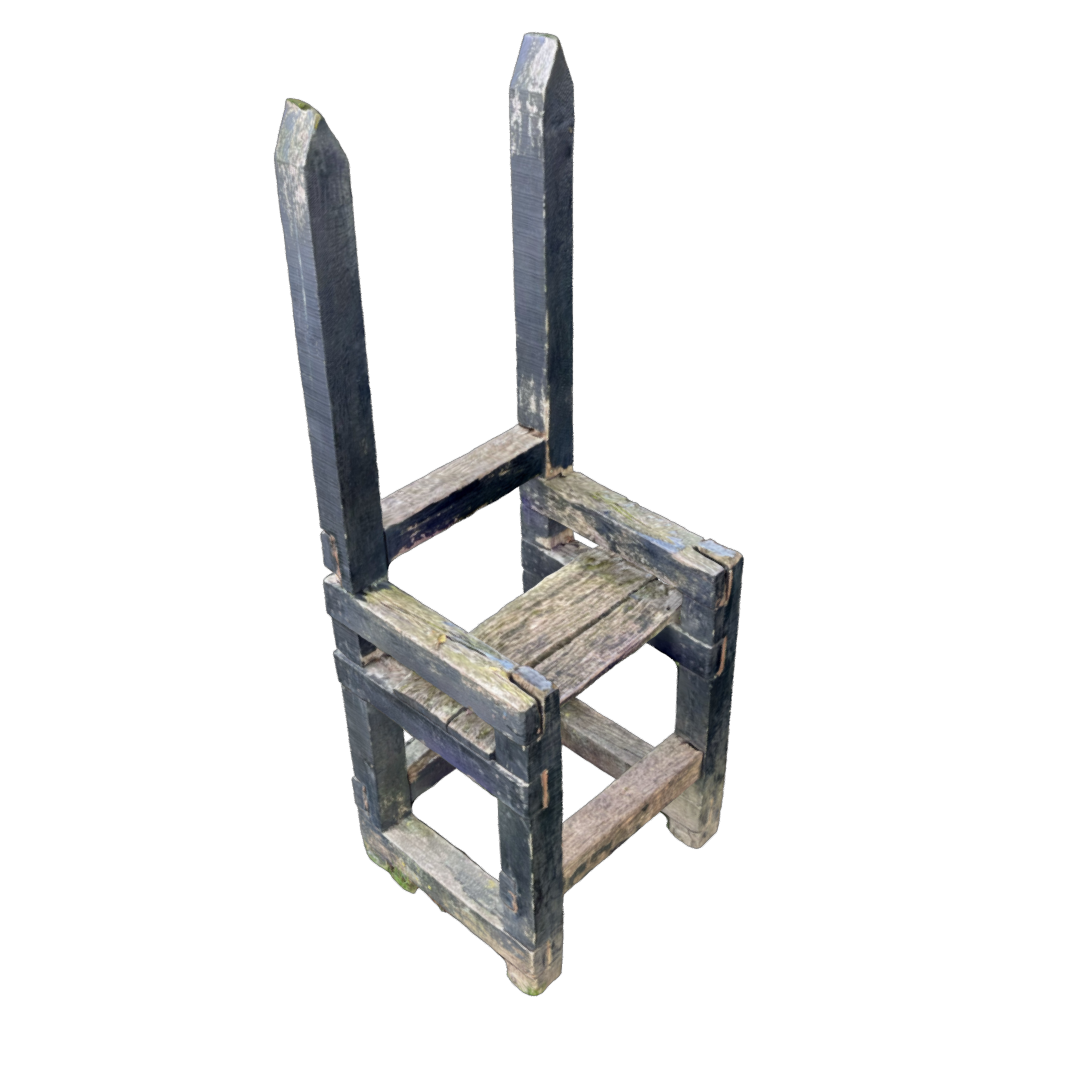
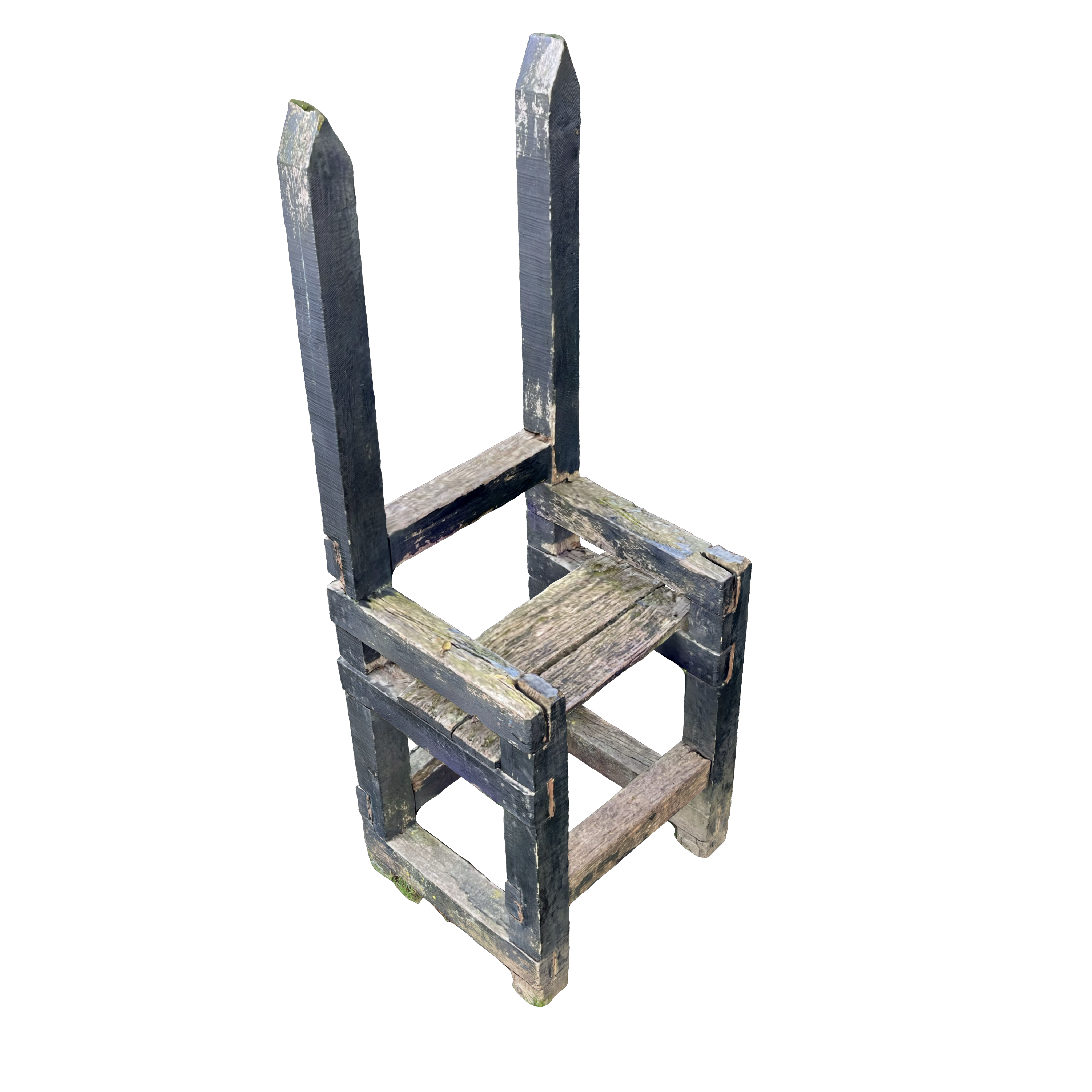
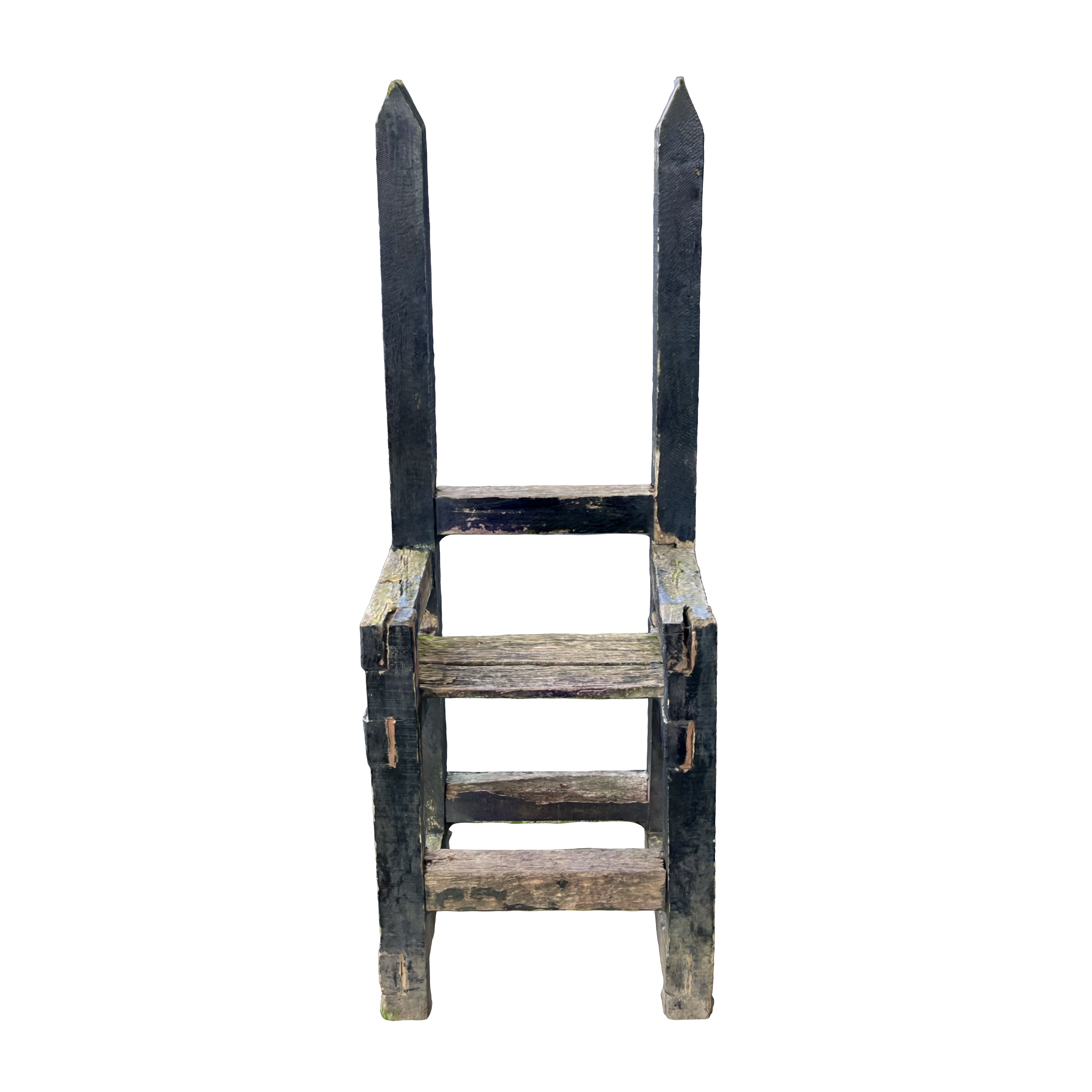
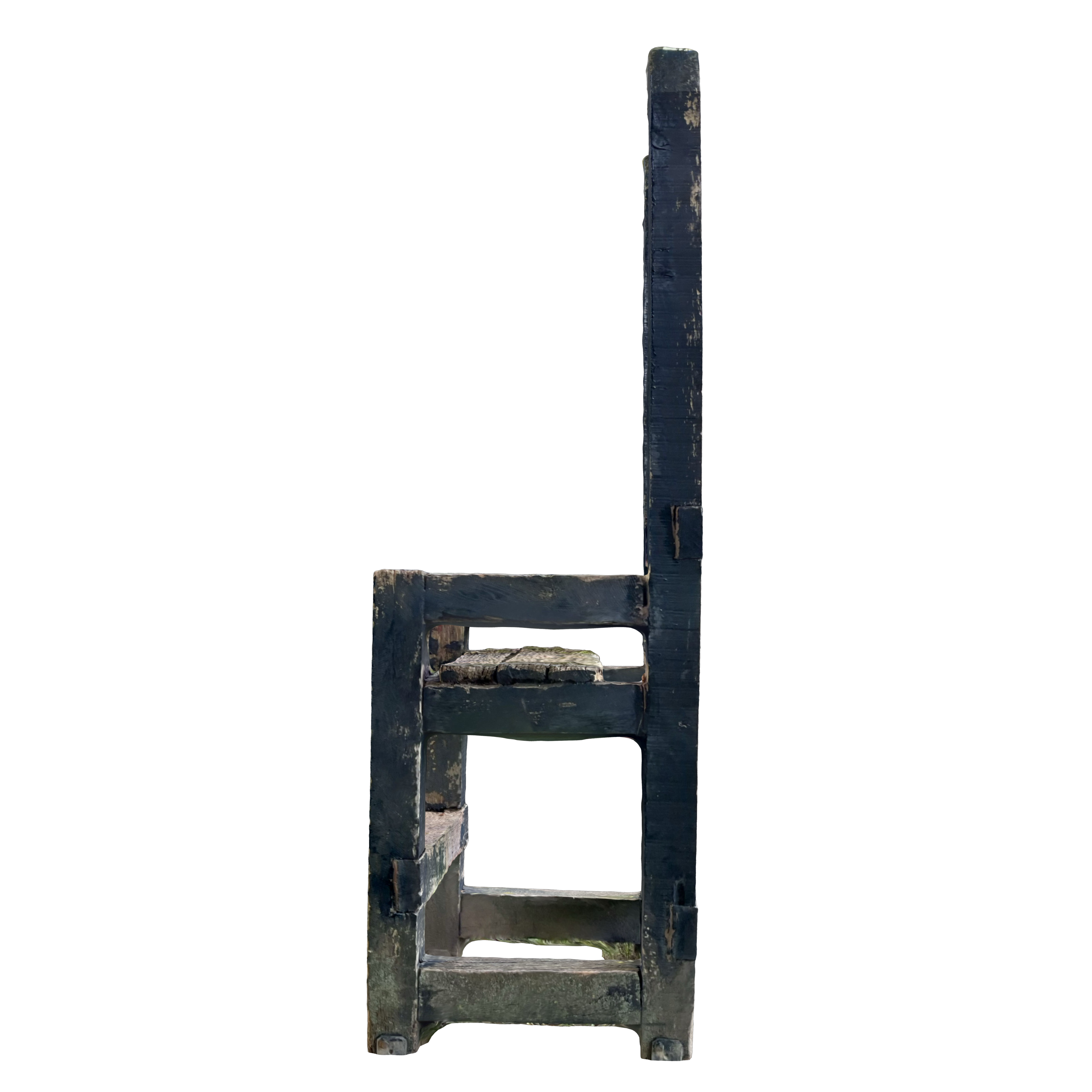
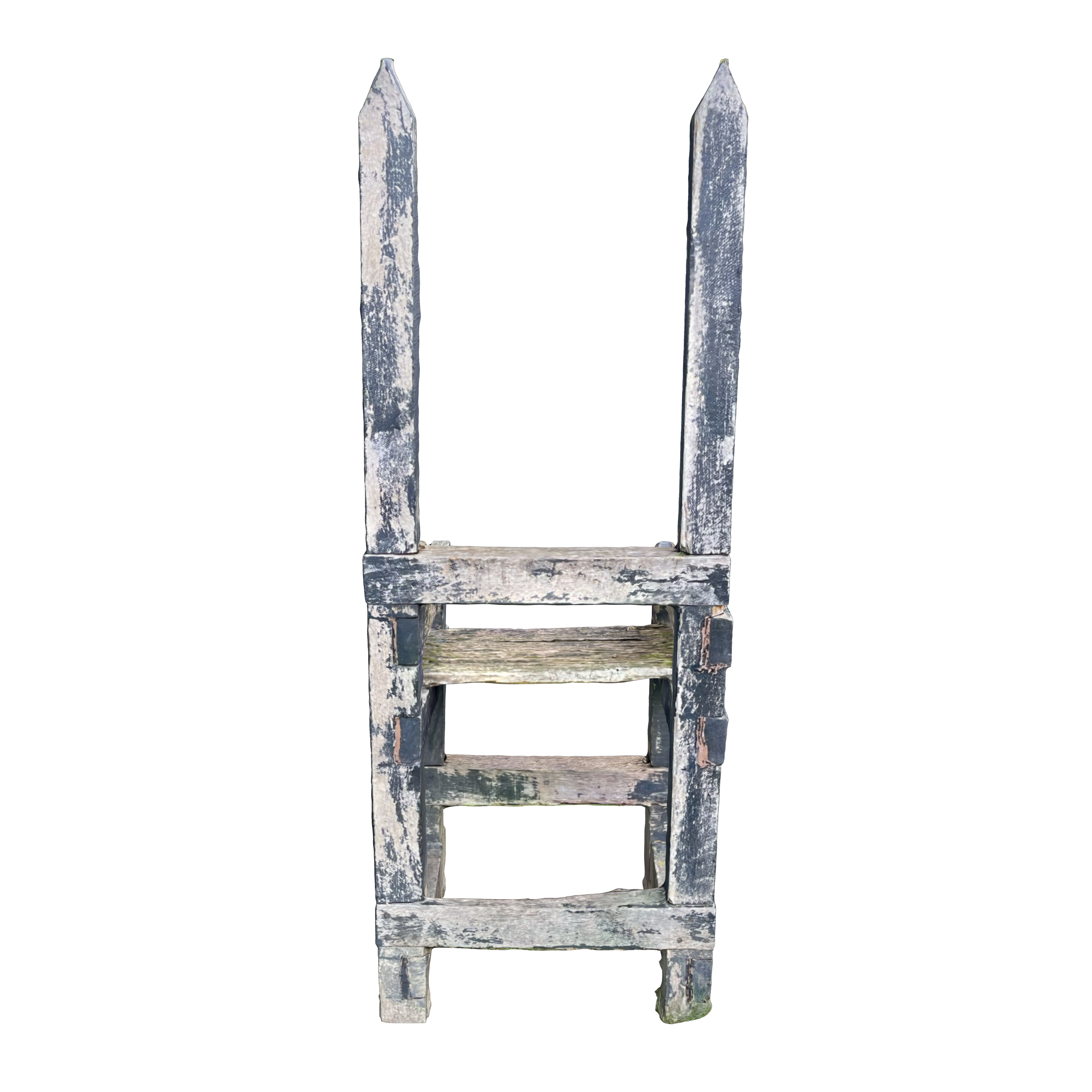
Standing among the old trees are five wooden pillars that look like modern totem poles. Created by artist Uwe Schloen, these figures were carved using a chainsaw, giving them a raw, rugged energy. They are joined by a massive, roughly built wooden chair that completes the scene.
Simple Shapes, Deep Meanings
Schloen’s style is all about stripping things down to the basics. He carves simple but powerful symbols directly into the wood. This specific group features:
- A Janus head (a face looking both ways)
- A flower
- A heart
- A duck
- A skull
These symbols represent the big contrasts in life: childhood and death, playfulness and seriousness.
To protect them, Schloen wrapped four of the sculptures in a thin 'skin' of grey lead. However, he left the Janus head exposed. This was intentional—over time, the wind and rain will wear down the faces of happiness and sadness until they eventually blend together and disappear.
Contrasting Styles
The wooden sculptures are framed by a steel fountain designed by Erhard Christian. It’s a complex piece of engineering that shows water in all its forms, from tiny droplets and mist to a full waterfall.
Near the bistro entrance, you’ll find a different style: a glass and bronze sculpture by the Czech artist Borek Sipek. Sipek was a major figure in 'Neo-Baroque' design (a fancy, decorative style from the 80s). He was so highly regarded that he was eventually hired as the lead architect for the Prague Castle.
A Second Life
This collection was first placed in front of the theater in 1994. Because the sculptures were outside and made of natural materials, they eventually suffered a lot of weather damage. Fortunately, a local art association (Kunst e.V.) stepped in to fund a full restoration in 2003, ensuring they remain a part of the city's landscape.