Kleiner Reinsbrunnen
Artist: Friedrich Küsthardt · 1901
View 3D model
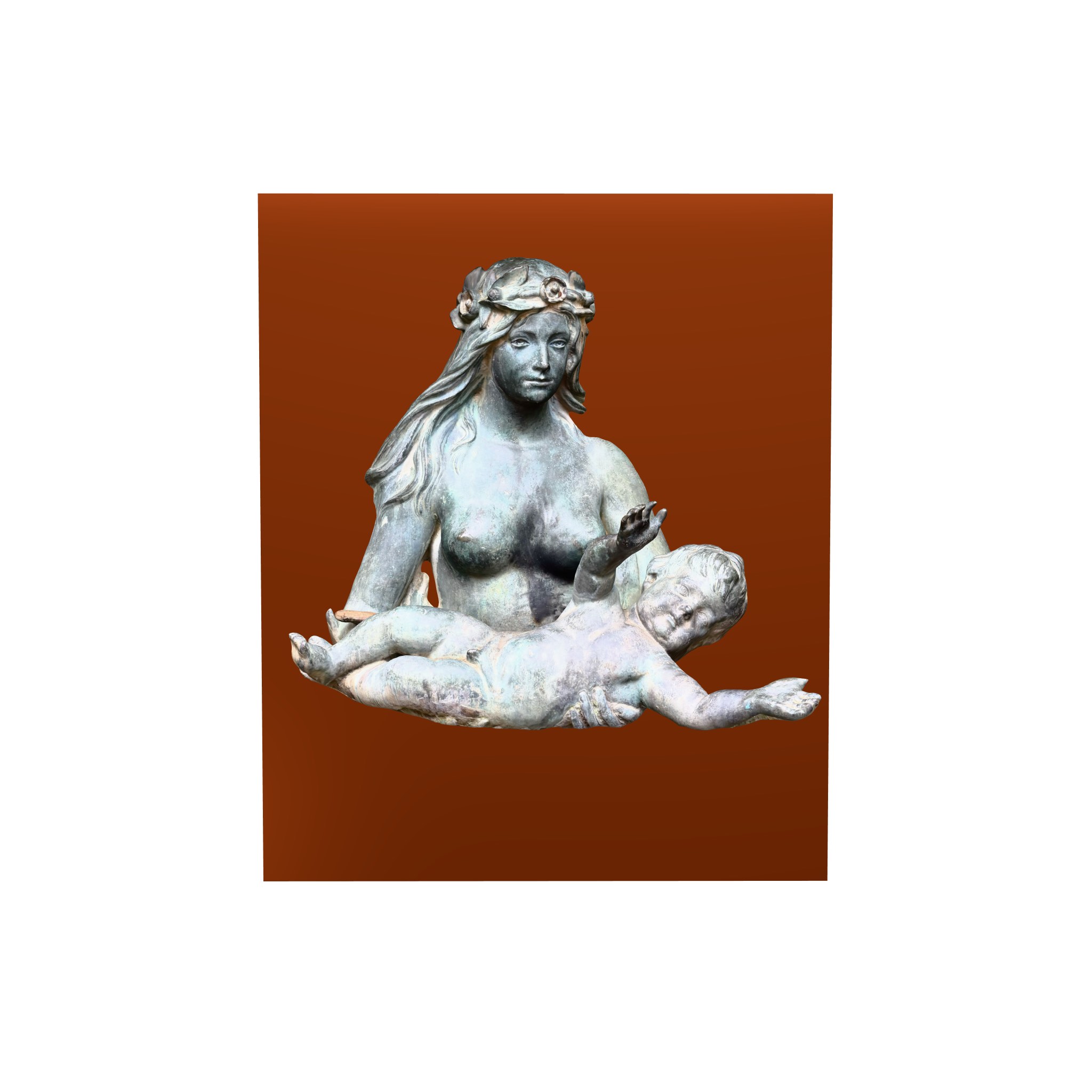
The Kleiner Reinsbrunnen is a historic site on the Hainberg in Göttingen, deeply rooted in local folklore. The current installation is designed as a grotto and features a bronze sculpture of a nixie holding a child in her arms. According to an old legend, women could see their unborn siblings in the clear spring water, a theme symbolically captured by the sculpture.
Historically, the Reinsbrunnen was of crucial importance for the development of Göttingen's water supply. As early as 1568, the master well-builder Hügel established a pipeline made of hollowed oak and beech trunks that carried water to the city's market square. In the 19th century, the spring played a central role in the debates over urban hygienic reform after severe typhoid epidemics highlighted the urgent need for a clean drinking water source.
Today's artistic design featuring the nixie dates back to 1901 and was created by the sculptor Friedrich Küsthardt. The fountain remains a popular destination for hikers and walkers above the Schillerwiesen, serving as a reminder of the era when the city transitioned from private, often contaminated wells to a modern, central water supply system.